
The GLPZone research library
A little more context.
A clearer perspective.
The science behind the sequence. The meaning behind the measurement. A library for understanding research materials in greater detail.
01 / A useful foundation
From the first question
to the finer detail.
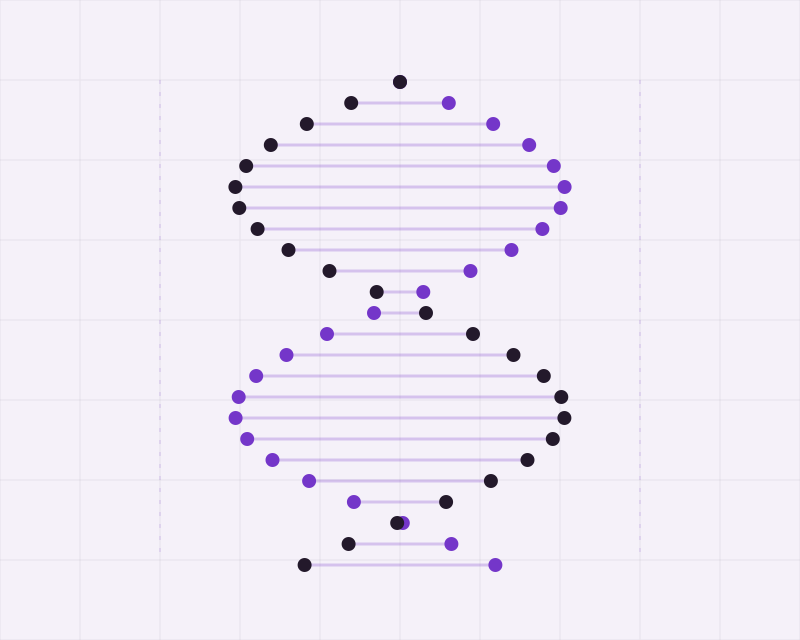
Foundations · 4 min read
What are peptides?
Start with the sequence. A clear introduction to amino acids, peptide bonds, molecular structure, and the questions behind peptide research.
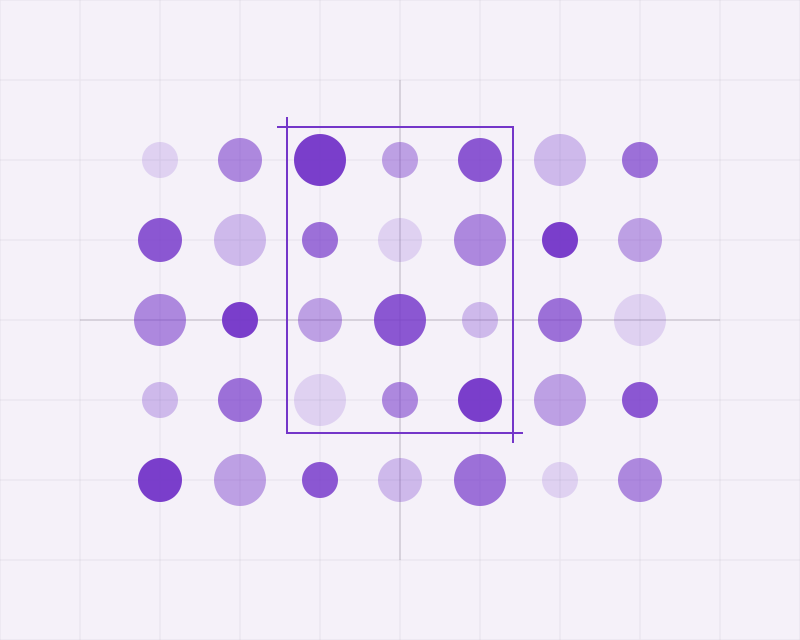
Quality & testing · 4 min read
Understanding peptide testing
Identity, purity, content, and contaminants answer different questions. Learn how complementary measurements build a more useful picture.
Foundations · 5 min read
The peptide glossary
A considered reference for the language of molecular structure, analytical testing, synthesis, stability, and laboratory documentation.
02 / Read the evidence
What a result tells you.
And the questions it leaves.
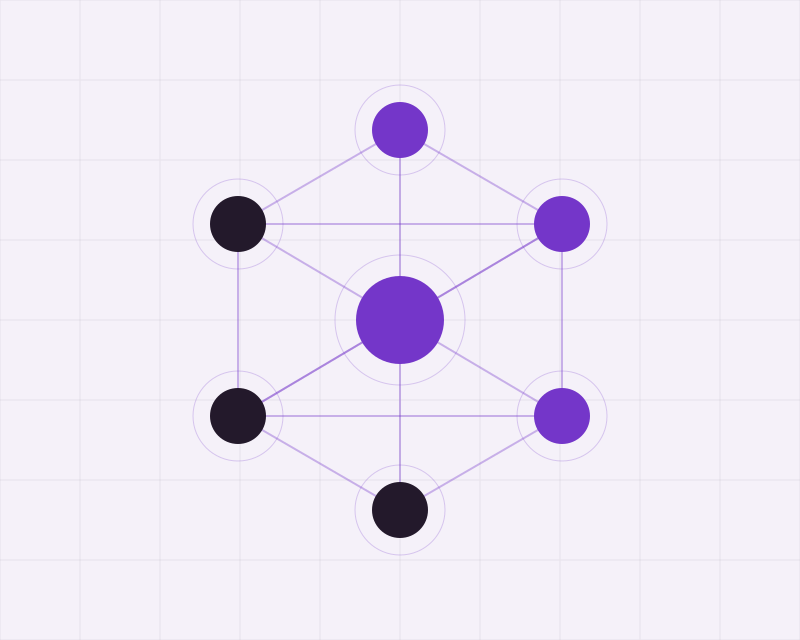
Quality & testing · 4 min read
How to read a peptide COA
A field-by-field guide to certificates of analysis: match the lot, separate specifications from results, and understand what the report establishes.
Chemistry · 4 min read
Purity, content & counterions
Why a chromatographic percentage and the amount of peptide in a sample are different measurements—and how salt form fits into the picture.
Quality & testing · 4 min read
HPLC & mass spectrometry
One method separates components. Another measures ions. Read chromatograms and mass spectra as complementary evidence.
03 / Material matters
How it is made.
How it changes.

Handling & storage · 4 min read
Storage & handling
Dry material and solutions have different stability questions. Understand the roles of moisture, temperature, light, time, and handling history.
Chemistry · 4 min read
How peptide synthesis works
From a growing chain on a solid support to a characterised research material. The chemistry behind synthesis, purification, and common impurities.
Handling & storage · 4 min read
Lyophilisation & peptide stability
What freeze-drying changes, what it leaves behind, and why a dry powder still needs its own storage and stability information.
04 / Keep the context
Better records.
More informed questions.
Research practice · 4 min read
Evaluating a research peptide supplier
Connect the product, lot, analytical method, measured result, and original report. A practical framework for reviewing the evidence behind a catalog.
Research practice · 4 min read
What research use only means
The role of a research reagent, the limits of a catalog description, and the information that belongs in a clear laboratory record.
Follow the details
Good information
belongs together.
Product specifications, analytical methods, and lot records each describe a different part of a research material. Keep their connections clear—and read every result within the scope of the method that produced it.
Explore quality & documentation