For laboratory research use only. Not for human consumption.

Free U.S. shipping on $200+

Repair & Recovery

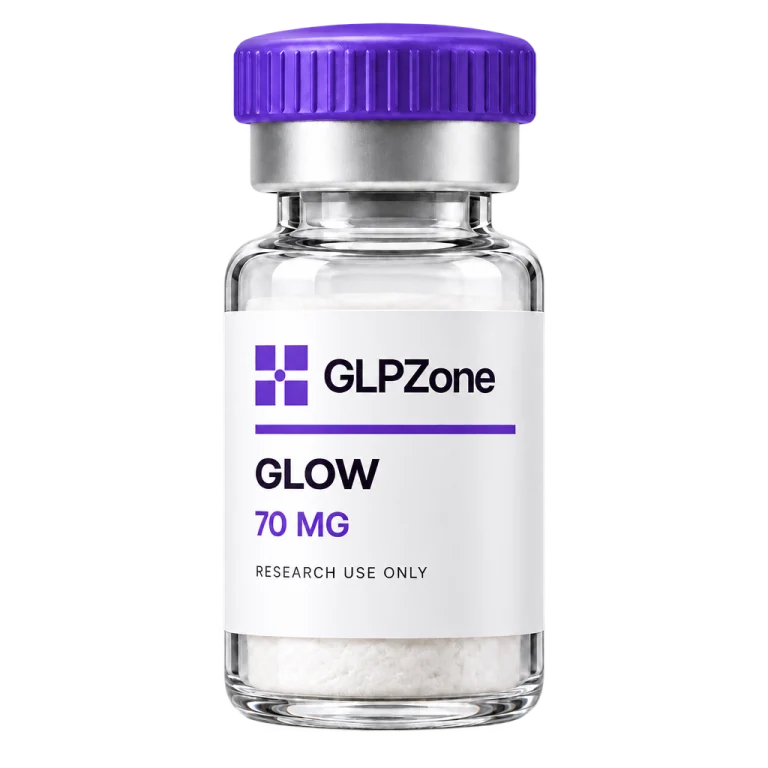
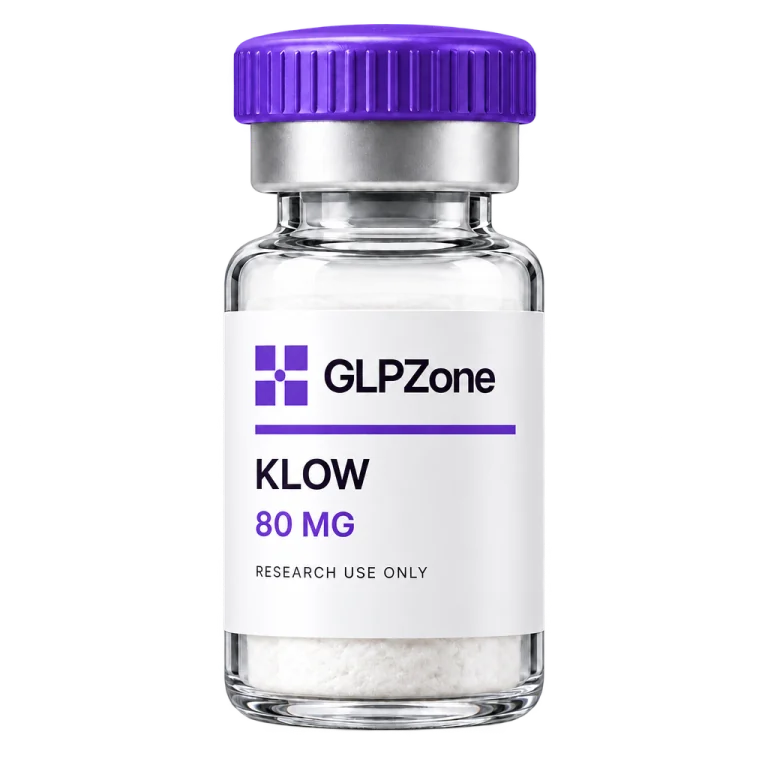
GLOW

GHK-Cu, BPC-157 & TB-500 research formulation

$114.00USD / vialView COA

A pair saves 10%. A set of three saves 15%.

Strength 70 MG
Vial quantity
  • Complimentary priority shipping from $200
  • Dispatched within 1–2 business days
  • Compare strengths and prices before ordering

For laboratory research use only.
Not for human consumption or clinical use.

Compound details
Compound
GLOW
Form
Lyophilized
Quality & documentation

The records shown here are illustrative. Request laboratory-issued documentation for your lot before ordering.

Lot
GLZ-26-GLOW-1057
HPLC purity
99.726%
Measured content
70.56 mg
Tested
19 Sep 2026
Report
NS-2026-06058
View the 70 MG certificate
Our quality approach
Shipping & handling

Priority, tracked shipping within the United States, free on orders of $200 or more after savings. Add Priority dispatch at checkout to have your order packed first; Private Clients receive it on every order. Follow the product documentation for laboratory handling requirements.

Shipping information
Explore the research profile
GLOW70 MG · Single
$114.00

01 / The compound

Understand
the starting point.

GHK-Cu, BPC-157 & TB-500 research formulation

GLOW Peptide Blend is a three-component research formulation combining GHK-Cu, BPC-157, and TB-500 in a single 70mg vial. The nominal formulation contains 50mg GHK-Cu, 10mg BPC-157, and 10mg TB-500.

GLOW is a multi-component research blend rather than a single molecular entity. Individual molecular identifiers such as one CAS number, molecular formula, molecular weight, or amino-acid sequence therefore do not apply to the blend as a whole.

The three components have separate research histories, and published findings involving an individual component should not automatically be attributed to the complete GLOW formulation.

02 / Research profile

The pathways.
The possibilities.

GHK-Cu 50mg: GHK-Cu is a copper-binding tripeptide complex investigated in fibroblast and extracellular-matrix research, including studies examining collagen and glycosaminoglycan synthesis and matrix remodeling.

BPC-157 10mg: BPC-157 is a 15-amino-acid research peptide investigated predominantly in preclinical models. Published work has examined tendon fibroblast outgrowth, cell migration, survival under experimental stress, and FAK/paxillin-associated signaling.

TB-500 10mg: TB-500 is a seven-amino-acid thymosin beta-4-derived research fragment. Analytical literature has identified TB-500 as the N-terminally acetylated sequence Ac-LKKTETQ. Direct pharmacological and human evidence for TB-500 itself remains limited. Total nominal blend content: 70mg

01 / Research focus

GHK-Cu and Extracellular-Matrix Research

GHK-Cu has a comparatively long experimental research history. In cultured human fibroblasts, researchers reported increased collagen synthesis following exposure to the GHK-copper complex. Additional fibroblast research has examined glycosaminoglycan synthesis and extracellular-matrix-associated processes. Primary experimental studies have examined GHK-Cu in cultured fibroblast systems, including collagen synthesis and extracellular-matrix remodeling. These findings provide mechanistic context for GHK-Cu as an individual research compound and should not be interpreted as evidence for the complete GLOW blend. Research context: these findings concern GHK-Cu itself and do not establish an effect of the complete GLOW blend.
02 / Research focus

BPC-157 and Experimental Tissue Models

BPC-157 has been investigated extensively in preclinical research. A tendon-fibroblast study reported increased explant outgrowth and fibroblast migration in experimental systems and increased phosphorylation of FAK and paxillin, signaling proteins involved in cellular adhesion and migration. Published BPC-157 research relevant to this section is predominantly preclinical. Findings from cultured cells, explants and animal models should be interpreted within the specific experimental systems used and should not be treated as established human outcomes. Research context: preclinical findings should not be interpreted as established clinical outcomes.

03 / Research focus

TB-500 and Thymosin Beta-4 Fragment Research

TB-500 requires careful scientific identification because the name is sometimes incorrectly used interchangeably with full-length thymosin beta-4. A 2012 analytical study characterized material sold as TB-500 as the N-terminally acetylated thymosin beta-4 17–23 fragment, Ac-LKKTETQ. A 2024 peer-reviewed study investigated TB-500 and its metabolites in experimental systems. In its fibroblast wound-healing assay, significant activity was associated with one metabolite rather than the parent peptide itself. FDA's 2026 scientific evaluation likewise describes TB-500 free base as the seven-amino-acid N-terminally acetylated fragment Ac-LKKTETQ and notes that direct pharmacological and human safety evidence remains limited.

Reading the evidence

Published research cited in this summary evaluates GHK-Cu, BPC-157, and TB-500 individually or in component-specific experimental models. The cited literature does not directly evaluate the complete 50mg GHK-Cu + 10mg BPC-157 + 10mg TB-500 formulation. Published findings involving the individual components should not be interpreted as evidence that the combined GLOW formulation produces additive or synergistic effects.

03 / Reference data

The details,
in plain sight.

Reference specifications describe a compound. The final lot documentation identifies the material supplied.

GLOW reference specifications
CompoundGLOW
Research areaRepair & Recovery
Physical formLyophilized
Vial options70 MG
Intended useLaboratory research only

Variant amounts are nominal catalog quantities. They are not instructions for use.

04 / Quality & documentation

A number needs
its context.

How testing works
01 / Purity

What is in the sample?

HPLC separates components under a defined method. Read the reported percentage alongside the chromatogram, wavelength, integration method, and scope of the test.

02 / Identity

Is it the expected compound?

Mass spectrometry provides molecular-mass evidence. Identity and chromatographic purity answer different questions; one cannot stand in for the other.

03 / Traceability

Does the report match the vial?

Connect the product name, variant, lot identifier, report date, and issuing laboratory. A report is useful only when its sample can be linked to the material being reviewed.

Independent analysis

Every GLOW lot is analyzed by Nordicstar Analytical Sciences for identity, content, and purity by HPLC with LC-MS confirmation. Each certificate carries a report number and verification key that can be checked at nordicstarlabs.com/verify. Research references below describe published science, not a certificate for a vial.

Read a COA with confidence
GLOW lot certificates
PresentationLotHPLC purityTestedCertificate
70 MG Current lotGLZ-26-GLOW-105799.726%19 Sep 2026NS-2026-06058

05 / Storage & handling

Care for
the material.

Keep sealed research material protected from moisture, unnecessary light and temperature fluctuations. Use the storage conditions documented for the specific compound, formulation and lot.

Solution stability depends on solvent, concentration, container and experimental conditions. Use a validated laboratory protocol; a universal post-reconstitution shelf life is not established by the literature summaries.

Explore the handling guide

06 / Common questions

A little more
understanding.

What is included in GLOW Peptide Blend?

The nominal GLOW formulation contains GHK-Cu 50mg, BPC-157 10mg, and TB-500 10mg, for a total nominal content of 70mg per vial.

Is GLOW one peptide?

No. GLOW is a name used for a multi-component research blend. The formulation combines three separately studied research compounds: GHK-Cu, BPC-157, and TB-500.

Does published research study the complete GLOW formulation?

The scientific literature cited here primarily evaluates GHK-Cu, BPC-157, and TB-500 individually. It should not be interpreted as evidence that the complete three-component blend has demonstrated additive or synergistic effects.

07 / Further reading

Go to
the source.

Selected literature for context. Read each study’s methods, experimental model, and limitations alongside its findings.

  1. 01
  2. 02
  3. 03
  4. 04
  5. 05
  6. 06
  7. 07
Our approach to research content

Curated pairings

Often studied together.

Explore the collection

Your research collection

Your bag 0

A new perspective awaits

Your bag is empty.

Explore the collection and find the compounds for your next research question.

Explore compounds

Find a research compound

Try GLP-3-RT, BPC-157, or NAD+.